
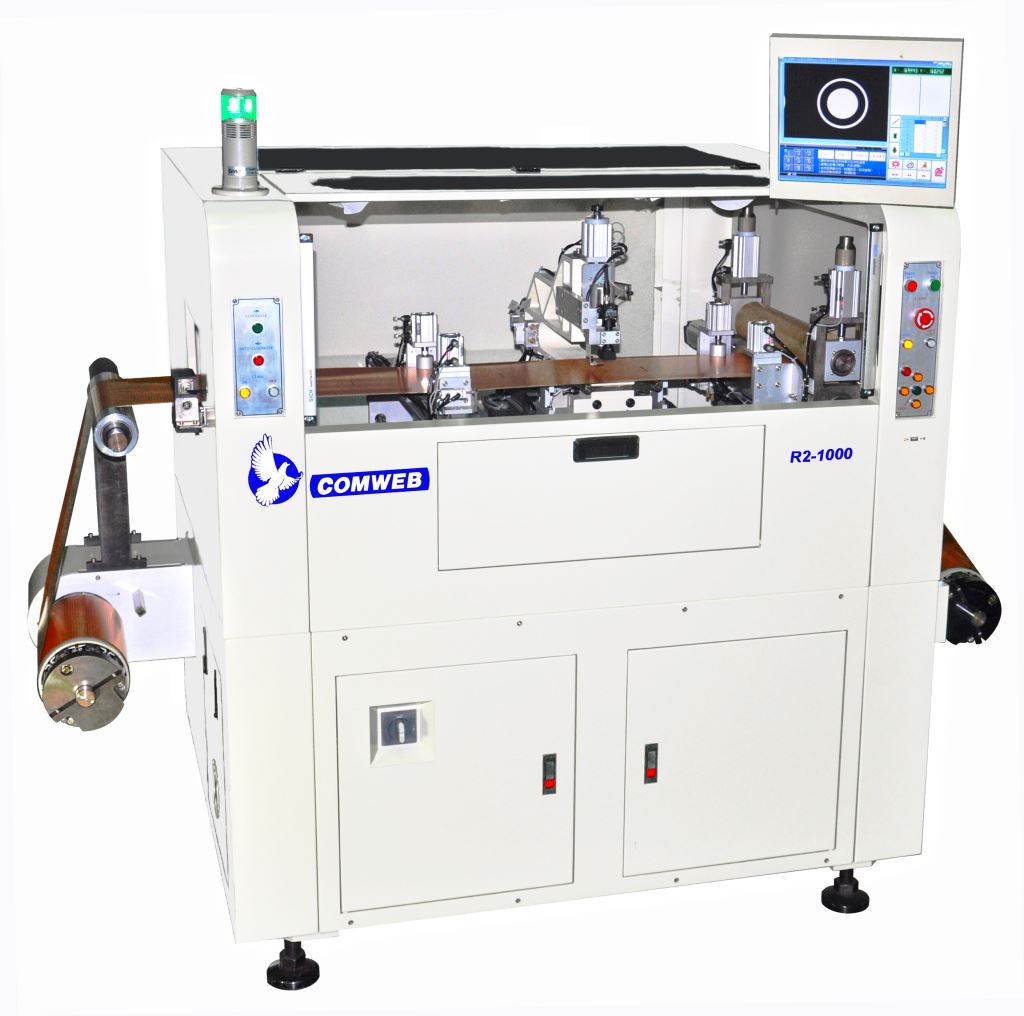
Both architectures can use vision alignment. The main difference is how material enters, is restrained, processed and exits—and whether that complete cycle remains stable.
1. Sheet handling controls each part
Sheets may warp, stick together or stack unevenly. The process must define separation, pickup, restraint, registration and unloading, as well as changeover for size variation.
2. Roll handling controls a continuous material
A roll line coordinates unwind, tension, flattening, edge control, step feed, processing and rewind. Instability in one stage can carry positional error downstream.
3. Output means the complete cycle
Punching time alone is not line output. Sheet systems include pickup and placement; roll systems include indexing, tension adjustment and roll changes. Good parts per shift is a more useful comparison.
4. Initial selection principle
Fixed-size, short-run or high-mix production often begins with sheet equipment. Continuous web material and long runs may favour roll-to-roll equipment. Final selection still requires sample and process validation.
Frequently asked questions
Can roll material be cut into sheets before punching?
Yes, but cutting, handling, stacking and the second registration step add cost and error that must be included in the comparison.
Which architecture has higher output?
Output depends on hole path, loading or indexing time, material stability and changeover frequency; architecture alone does not determine it.
References
This guide supports preliminary review and does not replace testing with the actual workpiece. Final equipment specifications are defined by the quotation and project documents.